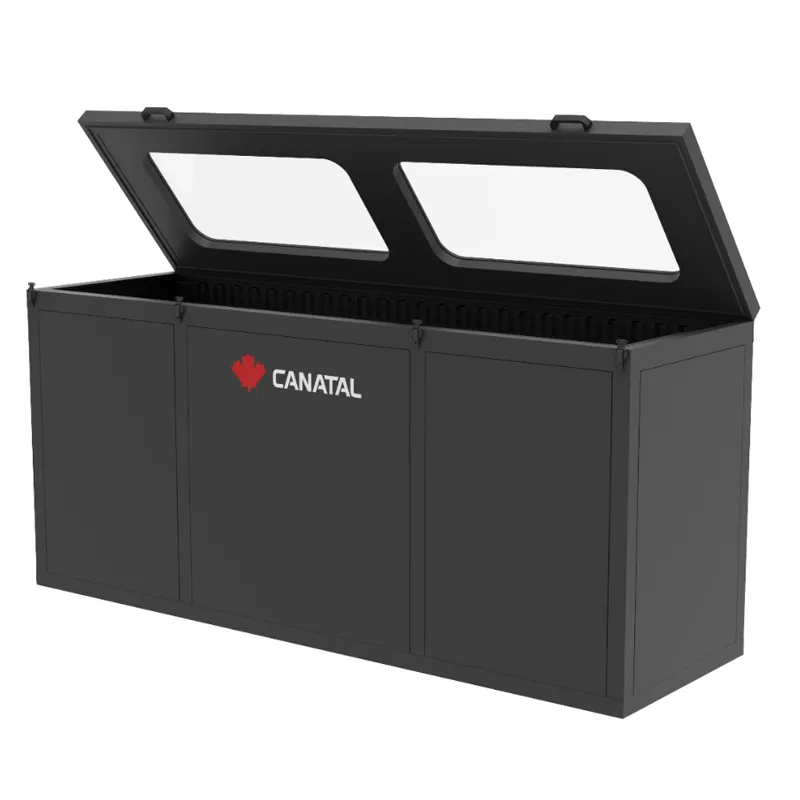
Single-phase immersion liquid cooling
The heat storage capacity of coolant is 1000+ times that of air, and the heat transfer rate is 20+ times that of air. Due to the excellent thermodynamic properties of the coolant, the overall heat exchange efficiency is high, the fluid temperature field is stable, there are no local hot spots, and a single cabinet can accommodate higher equipment power. The acceleration of the digital process and the "dual carbon" commitment have made the construction of green data centers a major trend. Liquid cooling technology, with its advantages of energy saving, environmental protection, safety, and low carbon emissions, has the potential to become an important cooling technology in the future.
Application Scenarios
Large data centers: High PUE requirements;
Communication machine room: High power, high density, difficult heat dissipation
Edge computing node: Multi-point collaboration, simple site selection
Liquid-cooled container data center: Rapid deployment, ultra-high density
Features and Value
Energy-efficient
▪ PUE<1.08, achieving ultra-low energy consumption and high-efficiency heat exchange, effectively saving 30%~40% electricity;
▪ Breaking through the heat dissipation bottleneck of single cabinets under traditional air cooling, the TANK can achieve a maximum heat dissipation density of 2kW/U, improving land utilization rate per unit area, and saving up to 70% of the floor space.
Safe and Reliable
▪ Immersion liquid cooling isolates air, reducing IT failure rate by 53%;
▪ System dual-redundancy design, transient intelligent switching, high backup;
Low Environmental Dependency
▪ Immersion liquid cooling can adapt to any climate conditions, can be deployed in white space, without considering airflow organization, realizing site selection free from geographical, spatial, and environmental limitations.